
EMS FLEET & PROCUREMENT GUIDE
Ambulance Dimensions & Specifications
Ambulance dimensions vary meaningfully by type, and getting them wrong before a remount can mean a module that doesn’t clear your station’s bay doors. Type 1 and Type 3 modules commonly run 12 to 14 feet in length with 68 to 72 inches of interior headroom, though exact figures depend on the manufacturer and configuration. Confirming these numbers against your existing facility constraints is one of the most overlooked steps in planning a fleet remount project.
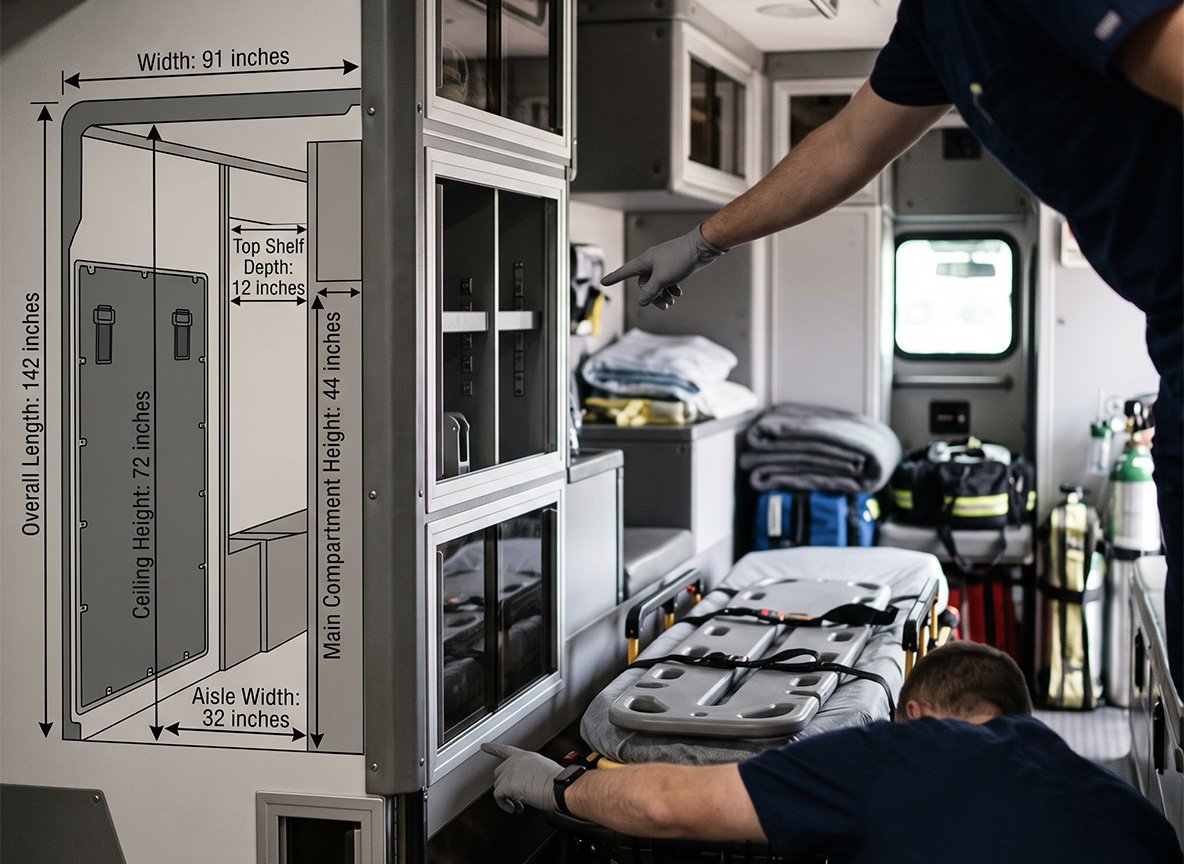
Interior dimensions by type
Type 1 and Type 3 modules commonly run 12 to 14 feet in length with 68 to 72 inches of interior headroom, giving EMS providers enough clearance to stand and work on a patient during transport. Type 2 vans run smaller overall, trading interior space for a lower curb weight and better fuel economy. Exact figures vary by manufacturer, so always confirm against the specific module you’re planning to remount.
| Spec | Type 1 | Type 2 | Type 3 |
|---|---|---|---|
| Module length | 12–14 ft | Integrated | 12–14 ft |
| Interior headroom | 68–72 in | 60–66 in | 66–70 in |
| Typical GVWR | 14,500–19,500 lb | 9,500–12,500 lb | 12,500–14,500 lb |
Why dimensions matter before a remount
Fleet managers need to confirm module height, length, and turning radius against existing station bay doors before committing to a chassis swap — a mismatch here is a common and costly oversight. Since a remount keeps the existing module’s footprint, checking these numbers now avoids surprises at delivery.
Common Questions
How long is a standard ambulance module?
Most Type 1 and Type 3 modules run 12 to 14 feet in length, though exact dimensions vary by manufacturer and configuration — always confirm against the specific module you’re remounting.
What’s the interior headroom in a Type 1 ambulance?
Typically 68 to 72 inches, allowing EMS providers to stand and work on a patient during transport without stooping.
Do dimensions change during a remount?
No — the existing module’s dimensions are fixed; a remount transfers that module as-is onto a new chassis rather than resizing it.
What’s the weight difference between Type 1 and Type 3?
Type 1 units on a full truck chassis generally run heavier due to the larger frame and greater payload capacity, while Type 3 cutaway-van builds are lighter and more fuel-efficient.
Why do dimensions matter for garage and bay planning?
Fleet managers need to confirm module height and length against existing station bay doors and turning radii before committing to a chassis swap — a mismatch here is a common and costly oversight.