
EMS FLEET & PROCUREMENT GUIDE
Ambulance Remount Glossary
This ambulance remount glossary defines the terms that come up constantly across fleet procurement, compliance, and remount conversations — from “box” and “module” to standards like NFPA 1917 and KKK-A-1822. It’s written for EMS directors and fleet managers who need quick, accurate definitions without wading through a full technical page, and every term links back to the in-depth guide that covers it, where one exists on this site.
Remount Basics
- Remount
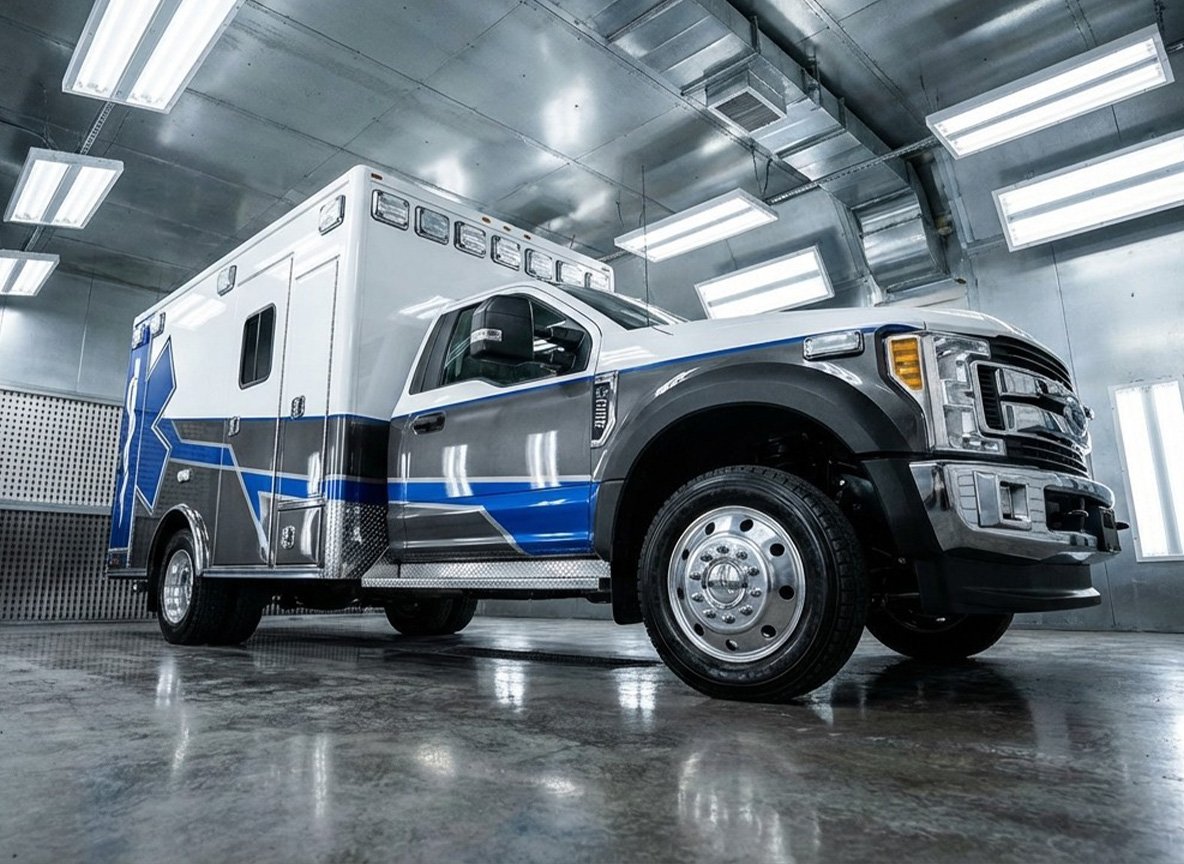
- Transferring an existing ambulance patient module onto a new chassis instead of building or buying an entirely new unit — typically resulting in 30–50% savings over a new-build purchase. See the full remount cost guide.
- Box / Module
- The patient compartment portion of an ambulance — the fabricated structure containing medical equipment, cabinetry, and the treatment area, separate from the cab and chassis.
- Chassis Shortage
- An ongoing industry-wide constraint in truck chassis allocation that has pushed new-build ambulance lead times to 24+ months, making remounting — which can often source a chassis locally — more attractive.
- Remount Candidate
- An ambulance whose module is structurally sound enough to justify transferring it to a new chassis rather than retiring it outright. See is my ambulance a candidate?
Chassis & Build
- Type 1 Ambulance
- A module mounted on a full truck chassis (Ford F-450/550, Ram 4500/5500) with a separate cab. See the full type comparison.
- Type 2 Ambulance
- An integrated van-based ambulance (Mercedes Sprinter, Ford Transit) where the patient compartment is built into the van body rather than a separable module.
- Type 3 Ambulance
- A walk-through module mounted on a van-cutaway chassis (Ford E-450), combining Type 1’s crew access with a lighter footprint.
- Cutaway Chassis
- A truck chassis with the cab intact but no rear body, onto which a Type 3 ambulance module is mounted. See the chassis guide.
- Multiplex Electrical System
- A modern wiring architecture that replaces traditional point-to-point wiring, commonly installed during a remount’s electrical overhaul. See the remount process.
- Liquid Spring Suspension
- A premium air-suspension upgrade commonly added during remounts for a smoother ride and better patient comfort in transit.
Standards & Certifications
- NFPA 1917
- The current U.S. standard governing ambulance design, performance, and safety. See NFPA 1917 explained.
- KKK-A-1822F
- The original federal ambulance specification, now superseded by NFPA 1917 but still referenced on older units.
- CAAS GVS
- The Commission on Accreditation of Ambulance Services’ Ground Vehicle Standard — the industry’s most rigorous voluntary ambulance safety benchmark. See CAAS GVS certification.
- EVT
- Emergency Vehicle Technician — a certification specific to servicing and modifying emergency vehicles. See what is an EVT?
- Ford QVM
- Ford’s Qualified Vehicle Modifier program, certifying upfitters and remounters who meet Ford’s own engineering standards. See Ford QVM explained.
- AMD
- The Ambulance Manufacturers Division of NTEA, an industry group that helps set ambulance manufacturing standards.
Common Questions
What does “remount” mean in the ambulance industry?
Transferring an existing patient module (the box) onto a new chassis instead of building or buying an entirely new unit.
What is the “box” or “module”?
The patient compartment portion of an ambulance — the fabricated structure containing medical equipment, cabinetry, and the treatment area, separate from the cab and chassis.
What is KKK-A-1822?
The original federal ambulance specification, now superseded by NFPA 1917 but still referenced on older units.
What is the “chassis shortage”?
An ongoing industry-wide constraint in truck chassis allocation that has pushed new ambulance lead times to 24+ months, making remounts (which can often source chassis locally) more attractive.
What does EVT mean?
Emergency Vehicle Technician — a certification specific to emergency vehicle service and modification.
Related guides on this site
Standards
Chassis
Companies